Match optics to the lab workload
Routine sample review, teaching, and basic diagnostic support do not always require the same microscope configuration. Start with the type of specimens handled, the number of users, and how many hours the microscope is expected to run each day.
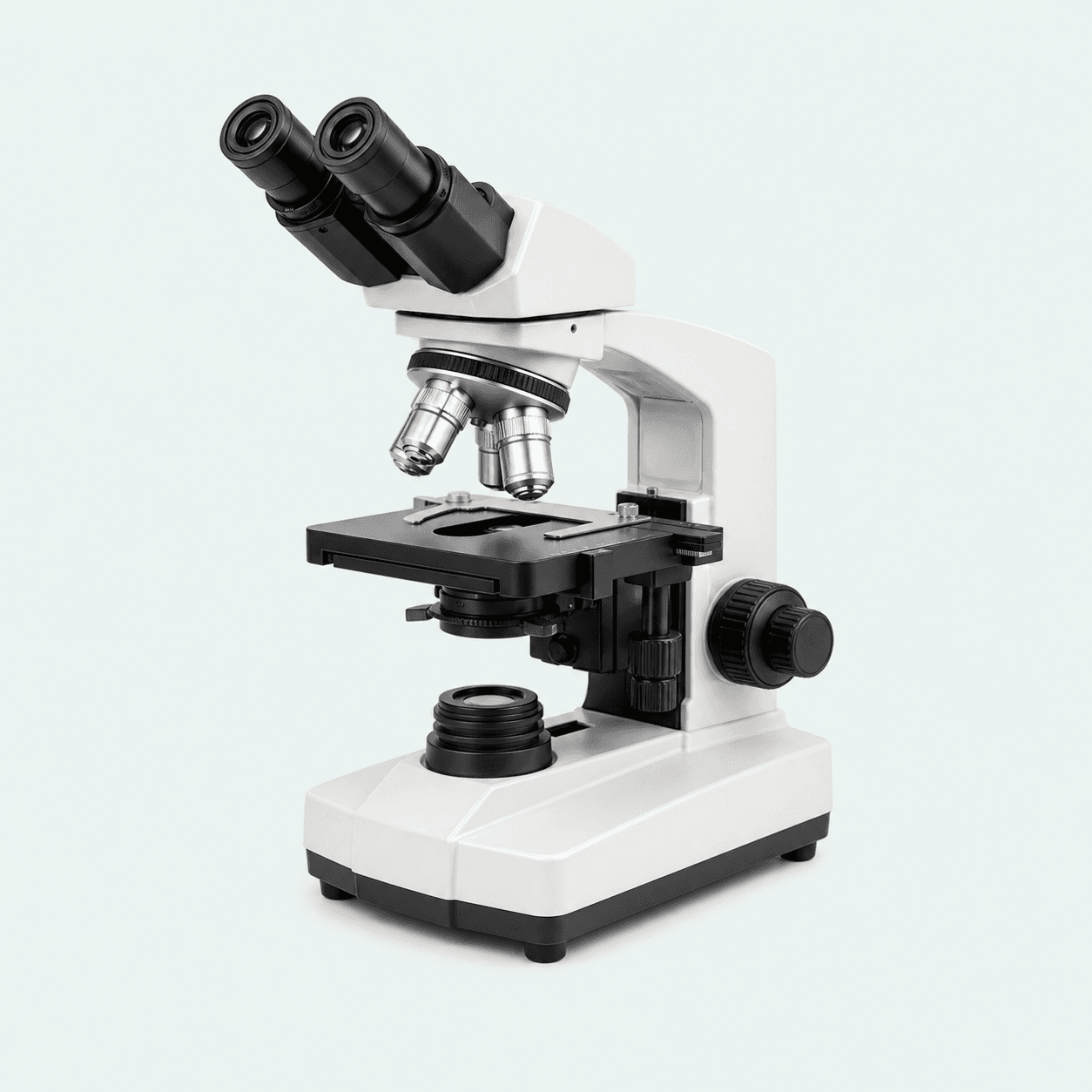
A stable binocular setup can improve comfort for repeated viewing. Clear illumination and smooth focus controls matter because small frustrations become larger over hundreds of slides.
- Confirm magnification requirements for routine work.
- Choose illumination that fits the room environment.
- Prioritize comfortable viewing for repeated use.
Evaluate durability and serviceability
Laboratory equipment should tolerate regular cleaning, careful transport between benches, and predictable maintenance. A microscope that is easy to cover, clean, and store will usually stay in better condition.
Ask how replacement bulbs, adapters, covers, and common accessories are handled. Service access can be just as important as the first-day specification sheet.
Plan the bench setup
Microscopes need a stable bench, nearby power, and enough space for slides, registers, and cleaning supplies. Good placement reduces unnecessary movement and lowers the chance of accidental damage.
For training environments, consider whether multiple users need identical controls. Consistency makes instruction easier and reduces errors when staff move between stations.